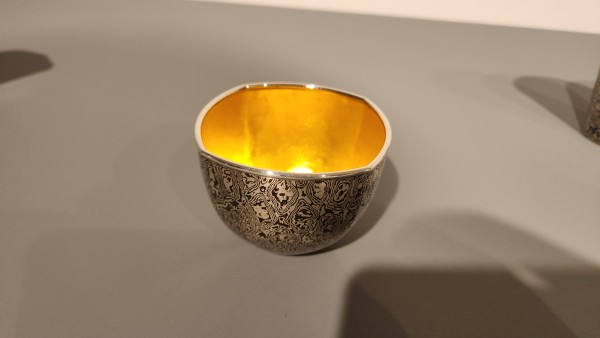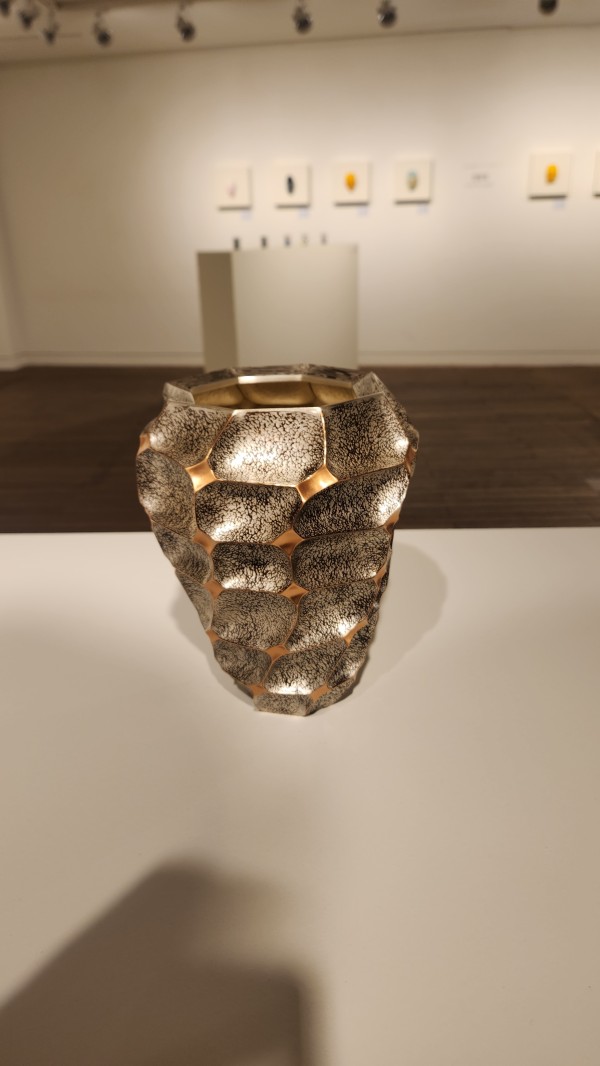
Metal is cold, yet traces of warmth linger on its surface.
The Metal Craft Artist of the Year Award is a prestigious prize hosted by Yuriji Craft Museum, Korea’s only museum dedicated exclusively to metal craft, and sponsored by Korea Zinc Co., Ltd., the nation’s leading non-ferrous metal company.
Within this context, Seokcheon Oh’s award-winning solo exhibition was held from December 17 to 22 on the 6th floor of Insa Art Center (41-1 Insadong-gil, Seoul).
The exhibition presented a focused overview of Oh’s major award-winning works, highlighting how advanced metalworking techniques can transcend craftsmanship to convey narratives of time, labor, and human presence.
Through the repeated layering and hammering of silver and copper, Oh transforms metal into a vessel of accumulated duration.
Oh begins his process by melting silver and copper together, thinning the fused metal into sheets, and stacking dozens of layers. He then selectively carves through only a portion of these layers to reveal patterns embedded within.
“The act of stacking metal is, in itself, the creation of layers,” the artist explains.
“What may look like a small pattern on the surface actually contains tens of thousands of hammer strikes. Every surface is a record of the hand passing through it.”
The primary technique Oh employs is Mokume-gane, a traditional method originating in Japan and rarely practiced in Korea.
The process involves bonding layers of different metals using heat and pressure, followed by repeated grinding, rolling, and hammering before patterns are finally revealed through carving.
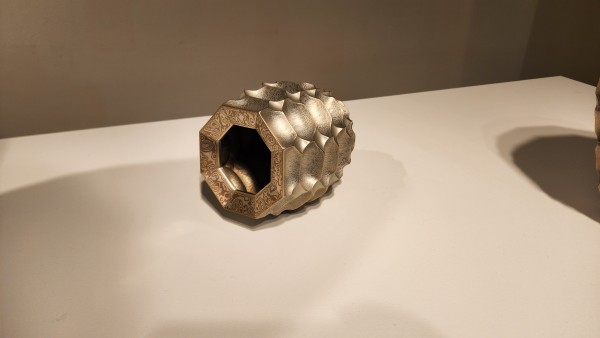
Rather than using Mokume-gane as a purely decorative device, Oh has expanded it into a sculptural language that makes visible the accumulation of time.
“Even if there are twenty layers, I never carve all the way through,” he says.
“By removing only six or seven layers, patterns emerge naturally. That’s where intention and chance meet.”
Completing a single work typically takes around three months, a pace that resists immediacy.
“This isn’t a process that yields quick results,” Oh reflects.
“The greatest reward is when the work turns out exactly as I imagined. And when it receives recognition at competitions, I feel reassured that I’m moving in the right direction.”
Oh’s practice stands at the boundary between craft and fine art, a position that reflects his broader concerns about how metal craft is perceived in Korea.
“Fine art is readily accepted as art, but craft is still often viewed as a commodity,” he notes.
“I believe metal craft can fully engage with contemporary art discourse.”
This awareness is shaping the next phase of his work. While maintaining technical rigor, Oh aims to bring personal emotion and narrative more directly into his practice.
“Until now, I focused on demonstrating technique,” he says.
“Going forward, I want to embed more of my life and stories into the work—to ease the emphasis on technique and allow the narrative to speak.”
With nearly 15 years of experience, Oh has received major accolades including awards from the Korea Craft Competition and the Cheongju Biennale, and several of his works are now held in public collections.
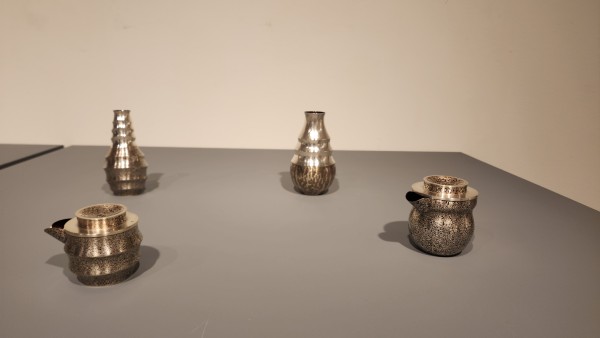
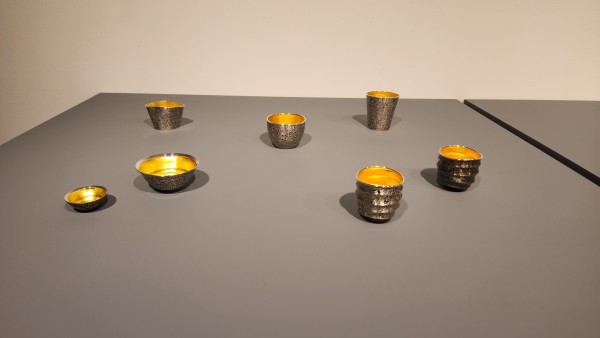
This exhibition not only consolidated those achievements but also reopened the question of metal craft’s artistic potential.
“I often think I should stop,” Oh admits,
“but my hands keep reaching for the metal. In the end, it’s a practice I can’t walk away from.”
The setting of Insadong, long a crossroads of tradition and modernity, further amplified the exhibition’s significance.
Presented within this historic cultural district, Oh’s award exhibition quietly demonstrated that metal craft—beyond technique—can function as a contemporary artistic language carrying time, labor, and lived experience.