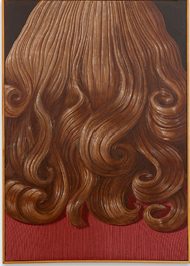
Curly Red Hair, 1969
Acrylic and sand on canvas
79 × 55½ inches (200.7 × 141 cm)
Lévy Gorvy Dayan is proud to present The Adventure of Domenico Gnoli, a landmark exhibition running from March 18 through May 23, 2026, at their New York gallery on East 64th Street.
This presentation marks the artist’s most significant showing in the United States in over fifty years, following his 1969 debut at the Sidney Janis Gallery. Organized in close partnership with the artist’s estate and family, the survey brings together a rare collection of paintings, drawings, letters, and personal notebooks.
Domenico Gnoli (1933–1970) led a short but remarkably impactful life.
Though he began his career as a set designer and illustrator, he found his definitive voice as a painter in 1964.
His signature style focuses on the extreme magnification of mundane objects—such as the texture of hair, the fold of a bedsheet, or the detail of a collar—transforming the familiar into something "metaphysical" and absorbing.
By isolating these fragments from their usual context, Gnoli achieved a sense of "monastic orderliness" and serene stillness. His technique was as unique as his vision; he often mixed sand into his paint to create textured, encrusted surfaces that evoke the feeling of Renaissance frescoes while maintaining a modern, almost photographic clarity.
Born in Rome to a family of artists and historians, Gnoli was exhibiting alongside masters like Giorgio Morandi by the age of eighteen.
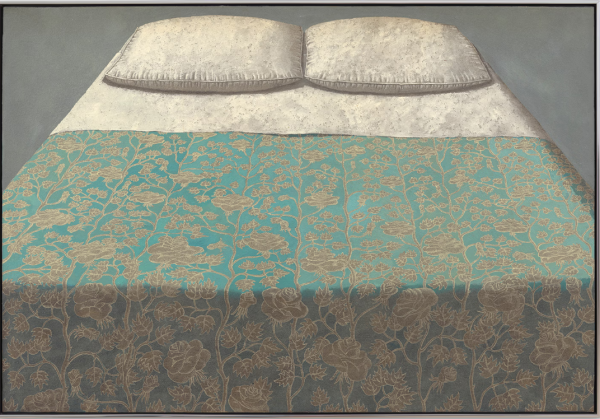
Domenico Gnoli
Il grande letto azzurro
Acrylic and sand on canvas
43¼ × 63⅛ inches (109.9 × 160.3 cm)
Before his untimely death at 36, he lived a cosmopolitan life between Rome, New York, and Majorca, contributing to major publications like Life and Sports Illustrated and designing for prestigious theaters in London and Zürich.
This new exhibition continues the momentum of his 2021 retrospective at the Fondazione Prada in Milan, reintroducing American audiences to a painter who found magic in the "simple, given elements" of daily life.
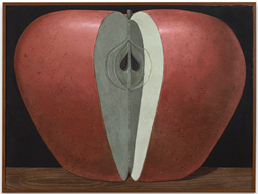
Domenico Gnoli Apple, 1968 Acrylic and sand on canvas 47⅛ × 63 inches (119.7 × 160 cm)