Artist Jeong Hye-yeon — Capturing Life in Oil and Mosaic**
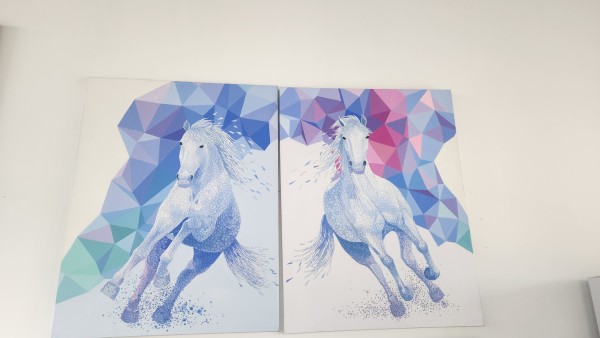
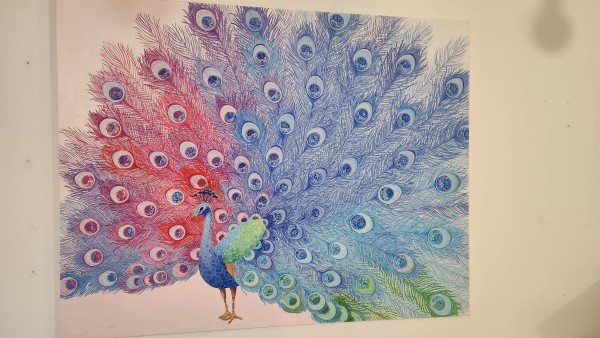
In her studio in icheon, gyeonggi, morning light spills across the walls, where several works from her Nature series are displayed. Layers of dried oil paint lie scattered on the floor, each a remnant of countless hours of meticulous work.
Jeong Hye-yeon, seated before a canvas, explains, “When I’m here, time just slips away. My hand keeps placing dots, stroke by stroke.” Indeed, her paintings are records of time, perception, and the subtle rhythms of nature.
For Jeong Hye-yeon, the connection to nature began long before she picked up a brush. “Even growing up in the city, I felt at peace watching flowers bloom and fade. Nature was my silent teacher,” she recalls.
During her formal art studies, she consistently returned to natural motifs. At first, her work focused on realistic depictions, but over time, she began to paint nature as she felt it, rather than merely how it appeared.
This shift, though gradual, transformed the direction of her artistic vision.
Her paintings reveal the inherent depth and texture of oil paint. Jeong rarely applies a single thick layer. Instead, she builds her images through thin layers, adding countless dots and strokes atop one another.
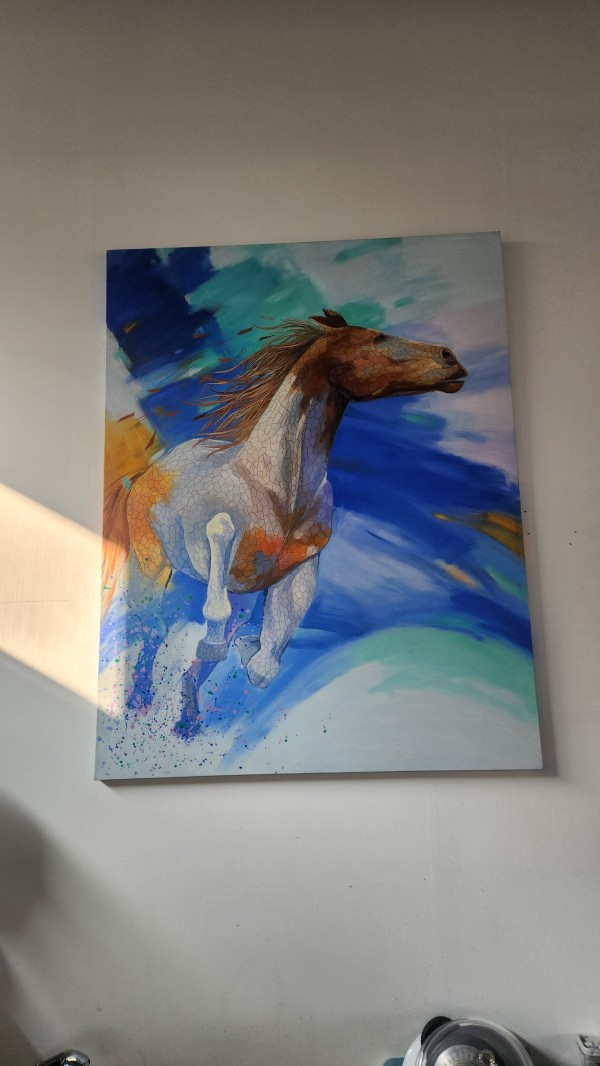
“Oil paint consumes time. You have to wait, layer after layer. Nature feels similar—it grows slowly, unseen moments accumulating to form visible life.”
Each layer interacts with those below it, creating a sense of movement and depth. In her process, every dot and stroke carries meaning. “Every mark is like a breath,” she explains.
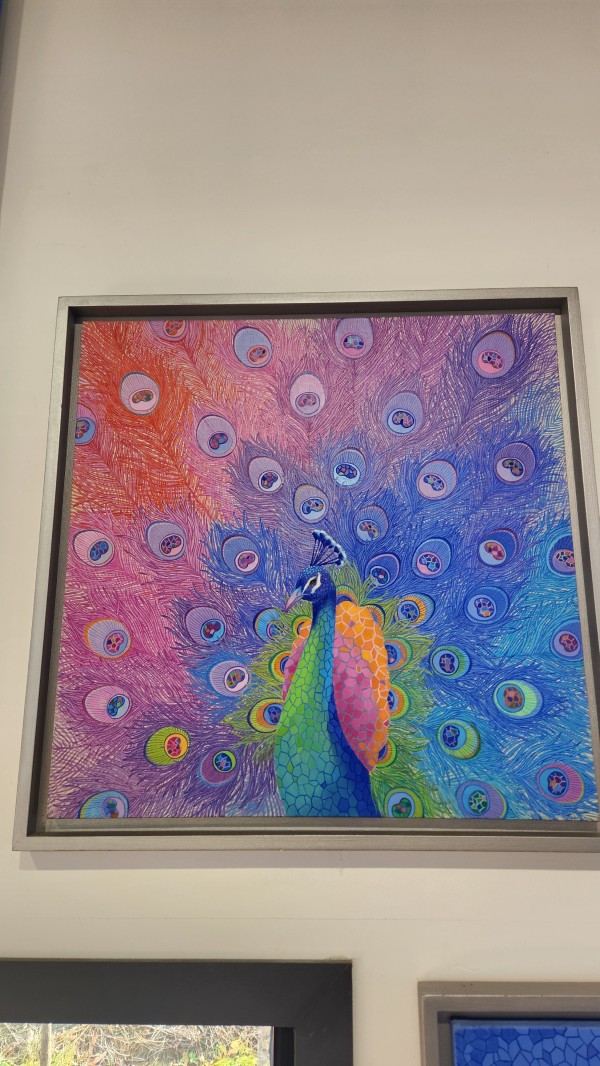
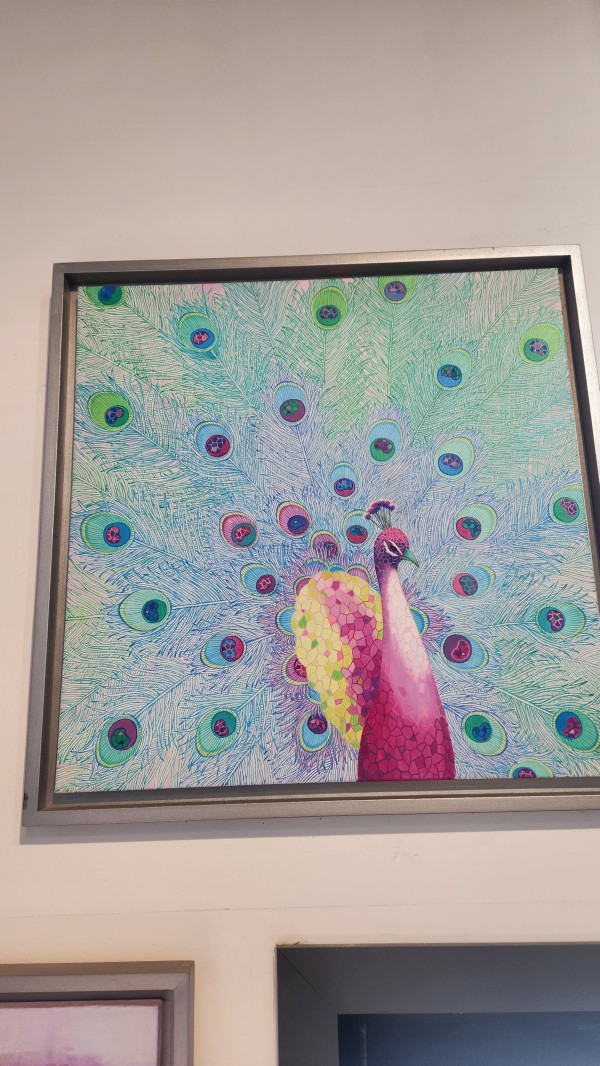
Jeong Hye-yeon’s signature approach is her mosaic-like assembly of color and stroke. From a distance, a canvas appears as a flower, a tree, or a forest; up close, the intricate network of dots and strokes emerges.
“Each dot is meaningful. Skip one, and the composition feels incomplete. It’s like looking at cells in a flower—thousands come together to form a single organism.”
The dots are placed intuitively, not mechanically. Sometimes they blend seamlessly, sometimes they remain distinct, creating a quiet rhythm across the canvas. For the artist, this repetition is both laborious and meditative.
She often spends four to five hours at a stretch without noticing the passage of time. “One dot leads to another, and the flow carries me away,” she says.
Her iconic Nature series has been her primary focus since the early 2010s:
-
2011, Nature: Strong color and bold compositions express the vitality and expansiveness of natural life.
-
2013, 72.7 × 72.7 cm: Chrysanthemums bathed in warm yellows and reds evoke a lyrical, meditative tone.
-
2014, 30 × 65.2 cm: The mosaic technique becomes more pronounced, emphasizing natural rhythms and cellular proliferation.
Rather than merely documenting landscapes, these works convey nature as a living presence, rich with texture and emotion. “When I look at flowers or trees, I sense time—their blooming, fading, shifting colors. They mirror human life,” she notes.
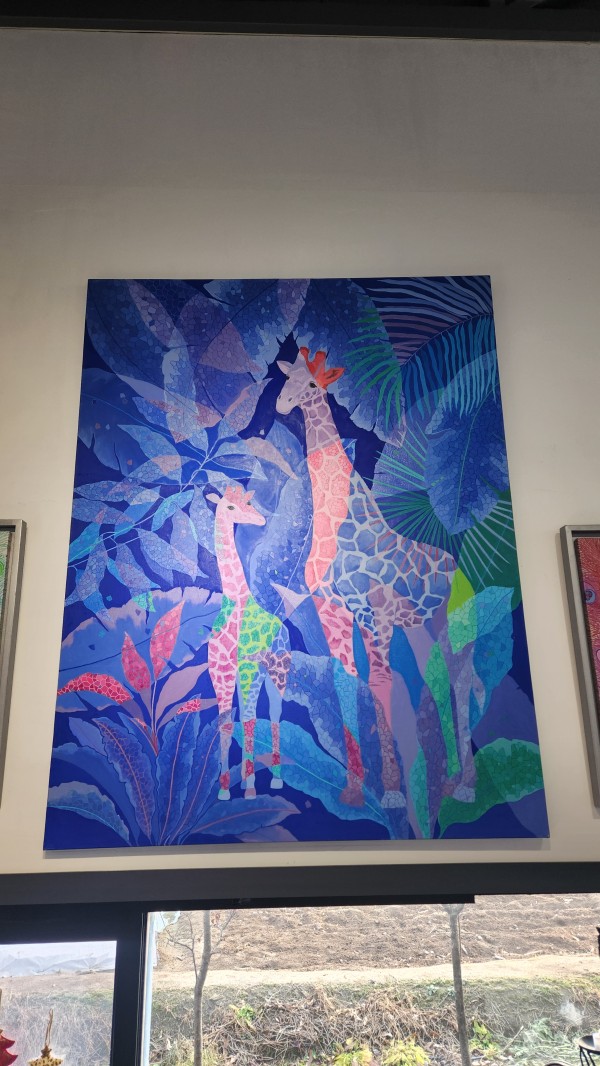
Her 2015 solo exhibition Nature at the Gana Insa Art Center, followed by 2016’s The Sound of Harmony at Gallery Phil in Changwon, brought her work to wider public attention.
Visitors often linger before her canvases.
“It’s not flashy, but somehow you can’t look away.”
“Quiet, yet alive.”
Indeed, her work leaves a subtle but lasting impression. Like nature itself, it doesn’t announce itself loudly—but it breathes.
Jeong is now exploring further refinement. By simplifying forms and adjusting the size and density of her dots, she seeks to capture both natural and human emotions simultaneously.
“Painting nature is endless. Even the same flower looks different each day, light changes, my emotions change. That’s why I keep placing dots. Each one gives birth to a new nature.”
Jeong Hye-yeon’s paintings are ultimately about human perception as much as nature itself.
Through the layers of oil, the rhythm of dots, and the passage of time, her canvases quietly reaffirm the vitality of life and the continuity of the world around us.