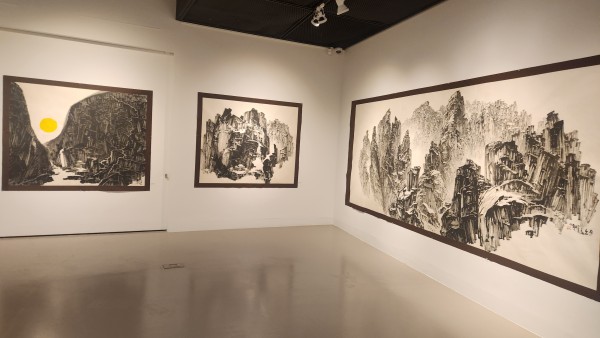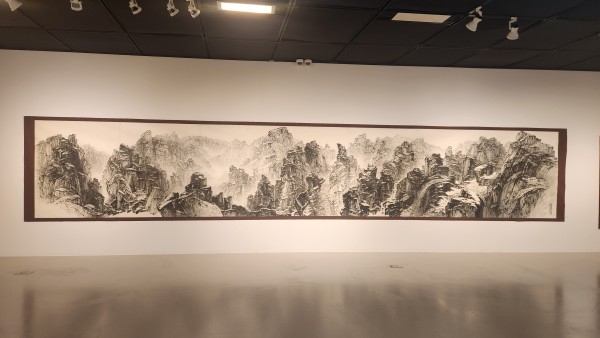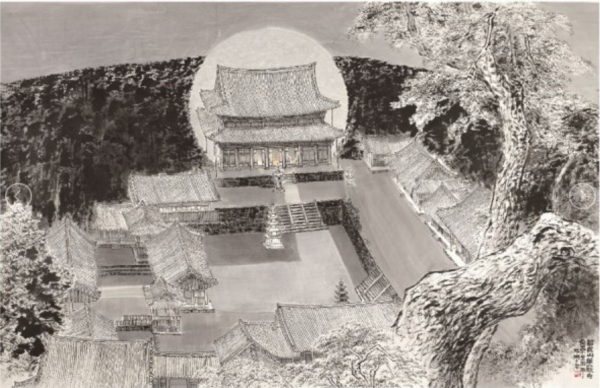
“One single stroke is where everything begins.”
For Lee Chang-Hoon, that first movement of the brush is not merely a mark, but a vessel capable of holding the vastness of the universe itself.
From this singular gesture emerge countless repetitions—years of brushwork and disciplined play with ink—through which the breath of nature is transferred onto paper and the artist’s own mind is gradually emptied.
In each stroke, the density of ink, the tempo of the brush, and the expanse of white space are fully revealed. Stroke upon stroke, time accumulates, traces of the artist’s inner state overlap, and a landscape slowly comes into being.
These layered gestures form the essence of Lee’s work, where the flow of time and the movement of the heart converge into a single pictorial moment.
Lee Chang-Hoon’s solo exhibition is currently on view at the Insa Art Center (3F, 41-1 Insadong-gil), running from the 17th through the 22nd. In an era when traditional Korean ink painting is increasingly marginalized, Lee—who has held a brush for 46 years—speaks calmly yet firmly about the enduring power of ink and emptiness.
Critical of the long-standing tendency within Korean art to seek recognition through imitation, Lee speaks candidly about originality.
“Even if you believe you didn’t copy, if others see it as imitation, then it is,” he remarks, acknowledging that art requires both learning through reference and the courage to move beyond it.
Amid a contemporary art scene dominated by abstraction, installation, and commercial trends, Lee remains devoted to what he sees as the core of Korean painting: line and void.
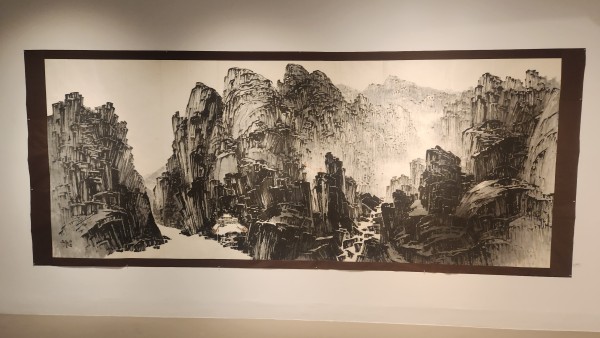
He emphasizes nature and the accumulation of inner discipline over surface novelty. “Ink is nature, and the brush is myself,” he explains, insisting that ink painting is governed not by technique alone, but by time, patience, and inner strength.
Because ink allows no correction, each stroke demands prolonged training and absolute concentration.
Lee observes that many painters retreat into abstraction when faced with the difficulty of Korean painting, yet those who endure its demands emerge with greater depth.
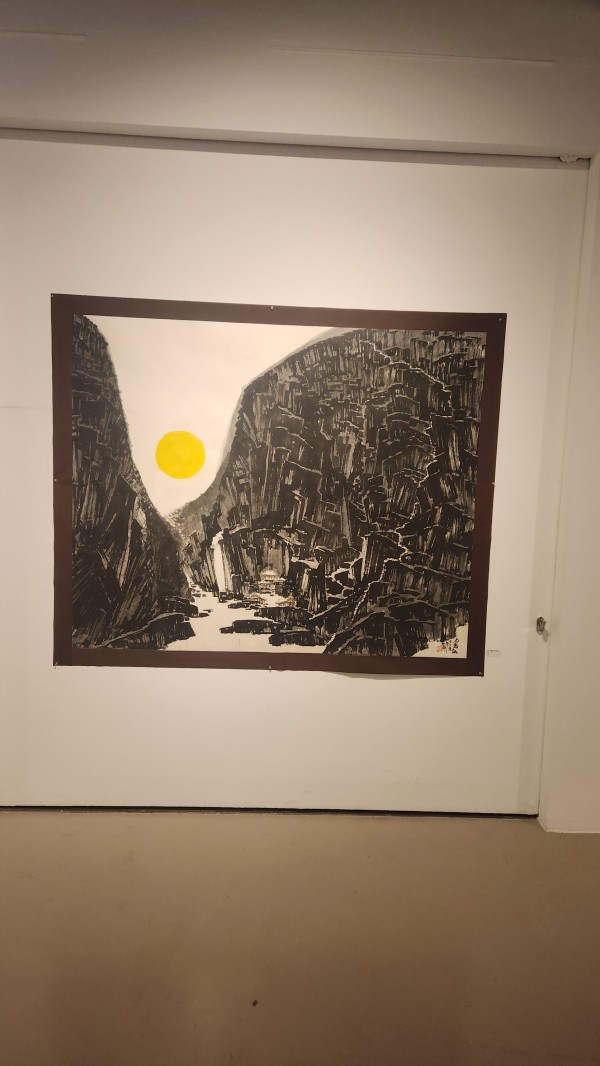
His compositional approach weaves together traditional spatial principles—flat distance, deep distance, and high distance—into a unified structure that generates a sense of dimensionality. While his works appear representational, abstraction quietly resides within them, inviting viewers to interpret freely. Mountains, rivers, waves, and birds become open narratives shaped by the viewer’s own memories and experiences.
Lee chose ink, he says, because it contains infinite shades without the need for color. The darkest black, paradoxically, reveals the most delicate differences—a fundamental allure of ink painting. He also stresses consistency, noting that even a single day without painting alters one’s sensitivity.
On the question of imitation and originality, Lee draws a clear line: imitation is necessary during learning, but beyond a certain point, each artist must find their own voice. “Just as every song has its own voice, every painting has its own form,” he says, warning that chasing trends often leads artists away from themselves.
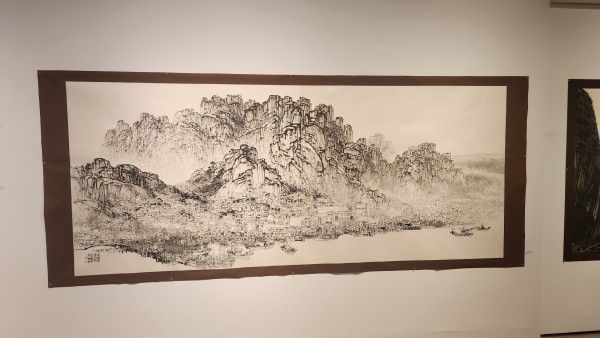
Lee also highlights the importance of working directly in nature. Having sketched extensively across Korea’s southern regions, he explains that repeated encounters with landscapes leave behind only essential memories, allowing unnecessary elements to fall away. This act of reduction, he believes, is what ultimately creates depth.
Regarding the globalization of Korean painting, Lee proposes expansion from within rather than adaptation from without. True globalization, he argues, comes from pushing Korean sensibilities and traditions into a contemporary language, not from mimicking foreign modes.
Open to new forms of circulation such as corporate collaborations and licensing, Lee nonetheless stresses that all partnerships must be grounded in respect for the artist.
When it comes to intergenerational dialogue, he focuses less on materials and more on shared methodologies, noting that Korean painting’s reliance on line distinguishes it fundamentally from oil painting.
He believes that explanation, openness, and the sharing of experience are key to bridging gaps with younger audiences.
In closing, Lee names nature as the greatest teacher. Faced with its overwhelming order and time beyond human will, the painter can only respond with humility.
“Show what must be shown,” he says, “but always leave space.” His words resonate as a contemporary expression of the enduring aesthetics that define Korean ink painting. “Where One Stroke Holds the Universe: Lee Chang-Hoon and the Quiet Power of Ink”