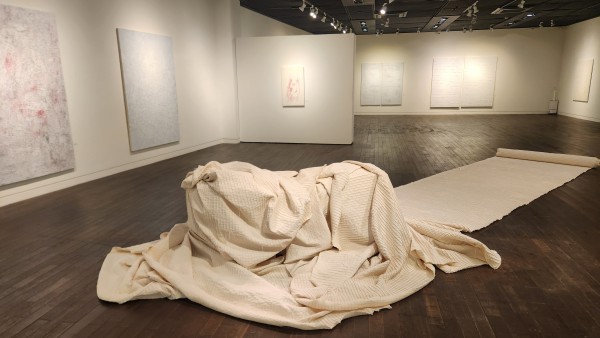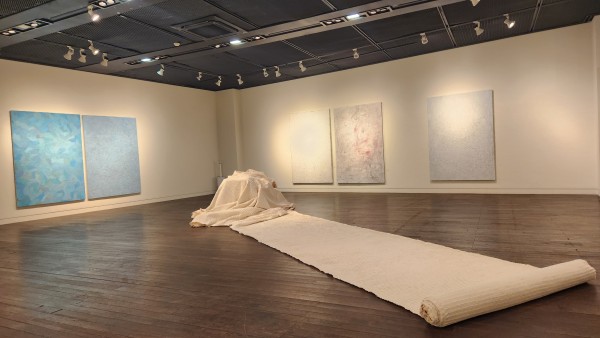
Inside Choi Ik-kyu’s exhibition at Insa Art Center (Insadong-gil 41-1), the air is filled with the faint scent of thread and the dry texture of worn fabric. One long, horizontally installed work immediately seizes the eye.
Media Shovel sat down with artist Choi Ik-kyu to hear the story behind it.
The vast, flat piece—composed entirely of stitching and completed over the course of three years—makes Choi pause each time he stands before it. His expression resembles someone looking into a diary laid wide open.
“It changes shape every time I work on it,” he says with a soft laugh.
It sounds like a joke, but the line feels like a compressed summary of his entire artistic universe. His works move fluidly between painting and installation; nothing is fixed. Mood, weather, and circumstance leave their marks.
When asked about the sluggish art market, he answers quietly:
“I’ve never been someone who sells well. So honestly, I don’t really feel the ups and downs.”
Labels like market darling, famous painter, or commercially successful artist hardly define him. For Choi, his practice is closer to “the only thing left for me to do,” a place of survival and a field of questions.
“Why am I still doing this?”
Now 64, he says he often asks himself why he continues. Though he has worked nearly four decades, worldly success has eluded him.
“Even holding an exhibition is a kind of desire. If I really wanted to stay pure, I shouldn’t exhibit at all. But… I can’t deny that part of me wishes someone would buy the work.”
His words carry the weight of someone who has long argued with himself.
“Sometimes I feel like I’ve become a crackpot philosopher. But I needed that, I think.”
For him, art is not a livelihood or hobby, but a method of answering the question: How should I live?
Three Years of Labor: Embarrassed Diligence
The work he describes as “a self-portrait of sorts” contains no flourish or rich palette. It is a long stretch of cloth marked only by repeated lines of stitching.
“I wanted to try doing something that was absolutely nothing,” he says.
“I felt embarrassed pretending to know, pretending to be something. So I decided to do the most unadorned thing possible. And that turned out to be stitching.”
It was simple repetition, but physically punishing. For three years he stitched a cloth stretching dozens of meters—some days only a little, other days not at all. When his hands hurt, he rested.
And he calls that time diligence. The title of the work is Embarrassed Diligence.
“Everything from those three years is inside it—boredom, hope, sighs. I tried to abandon art, but in the end, it became the most artist-like work I’ve made.”
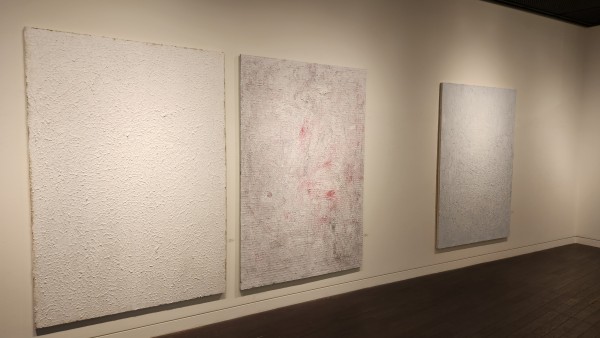
“Isn’t this Dansaekhwa?”
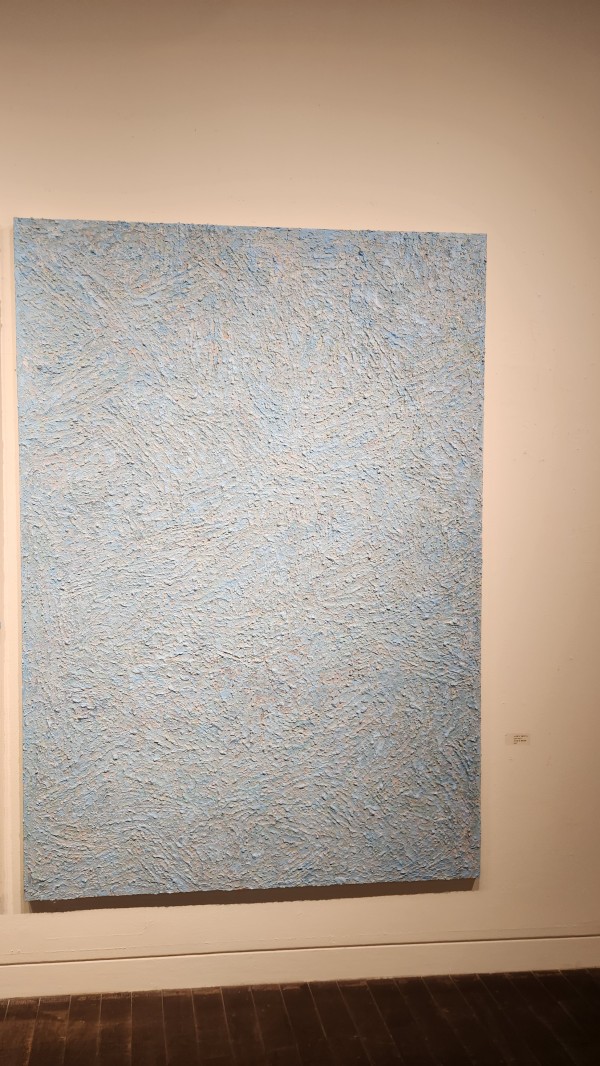
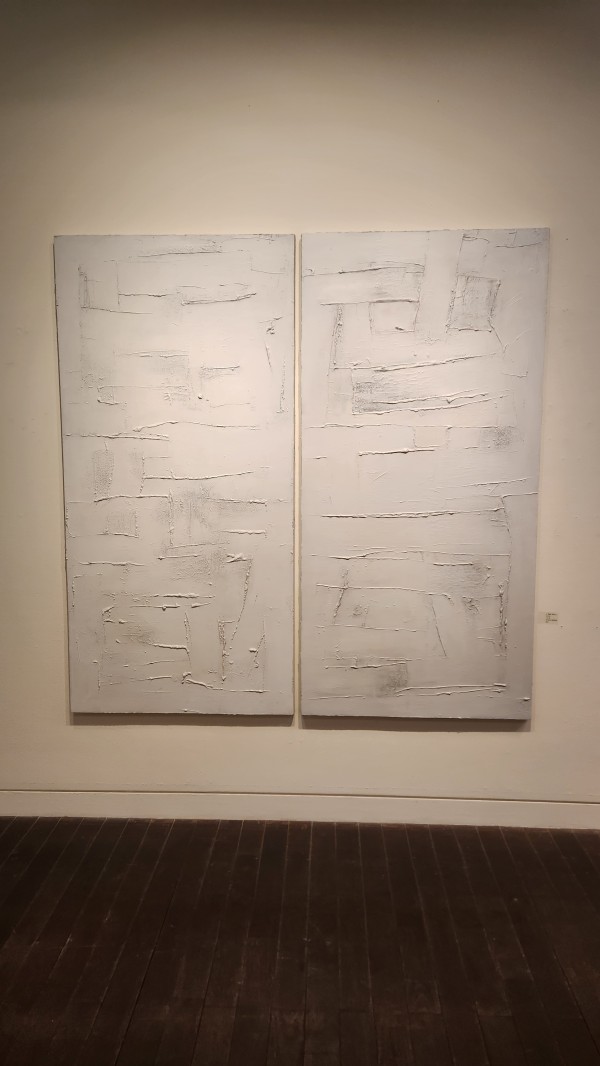
His work is often mistaken for Dansaekhwa, with its minimal lines and repetitive patterns. He admits the comparison used to unsettle him.
“When they first asked if it was Dansaekhwa… I didn’t feel great. Because I never tried to follow it.”
Yet he accepts the misunderstanding with calm detachment. Interpretation belongs to the viewer.
“If it looks similar, that’s fine. But I’m following my own path.”
Between Art and the Market
The contemporary art world revolves around brand collaborations, influencer marketing, and global galleries grooming star artists.
Choi’s world is far from that.
“These days artists need self-PR and marketing skills. But if I tried that, it would probably break me. My brain just doesn’t work that way.”
It sounds self-deprecating, but also like a quiet declaration of independence.
“A Self-Portrait of the Way I’ve Lived”
Choi’s works are unadorned, and he readily admits, “I’m not a successful artist.” At reunions, classmates ask how much he sells, and he confesses the question still stings.
Yet facing the stitched cloth he labored over for three years, something deeper emerges—something that outlasts opinions or market cycles.
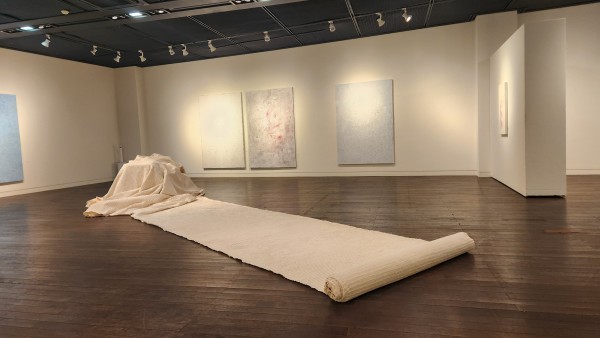
Inside the piece lies the discipline he kept, the art he abandoned and reclaimed, and the countless questions he has thrown at himself.
“In the end… this might be the truest self-portrait of who I am.”
Like the long stretch of fabric hanging quietly in his studio, Choi’s life and art continue—slowly, steadily—at a rhythm entirely his own, unbothered by the pace of the world.