Technology is no longer a tool residing outside our lives, but an environment conditioning our senses and relationships.
We wake to smartphone alarms, navigate along satellite-guided routes, and move through the day consumed by news curated by algorithms.
Within this framework, the ways we remember and relate to one another are fundamentally reshaped.
Marking the 20th anniversary of the SeMA Nanji Residency, the Seoul Museum of Art presents Origin of Love: AMOR EX MACHINA at the Seosomun Main Building from April 30 to September 06, 2026.
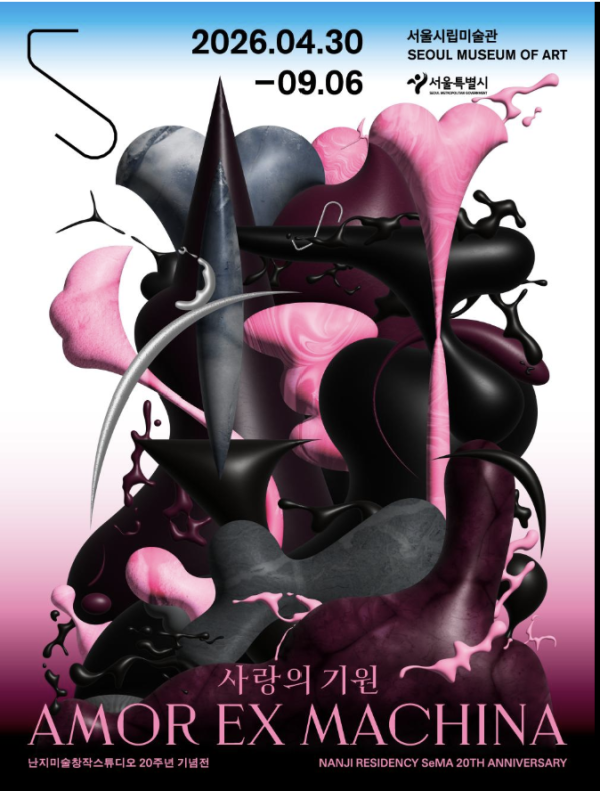
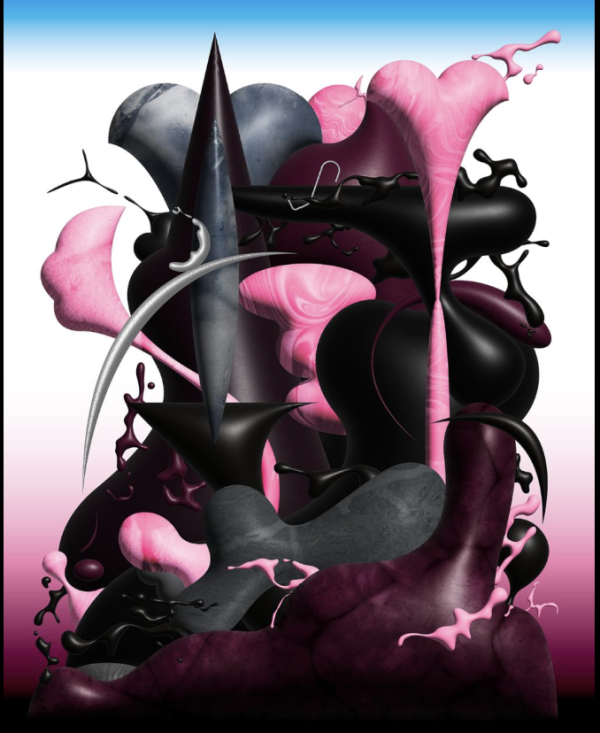
exhibition poster of amor ex machina
Featuring sixty works by seventeen artists across video, painting, sculpture, installation, photography, new media, and performance, this admission-free exhibition explores the origin of humanity and the enduring force that keeps people beside one another even as technology rewrites the forms of connection.
In the opening journey of the exhibition, the central question of what keeps us human in a technologically conditioned world is placed before archetypal scenes.
The narrative begins where technology trickles into the body, moves across a river where memory and oblivion blend, passes through the landscapes of those returning to unfamiliar worlds, and ultimately reaches a place where visitors can hold onto the meaning of love once more.
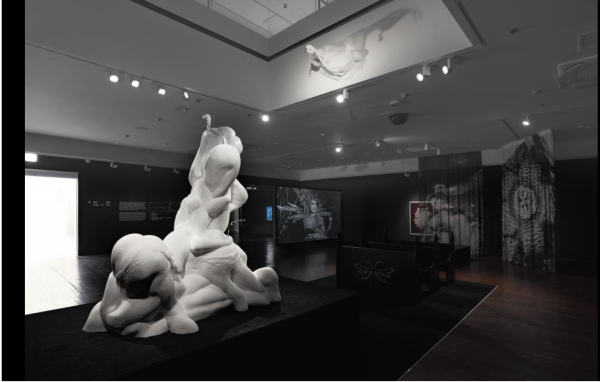
eMA Nanji Residency 20th Anniversary Exhibition: Origin of Love
Section 1. Stolen Flame
The initial space juxtaposes the fire stolen by Prometheus—which granted civilization at the cost of eternal suffering—with the contemporary merging of technology and physical form.
Here, technology dissolves the boundaries of the skin, loosening the divisions between human and non-human, and allowing unexpected structures to emerge from the collapse of existing forms.
The participating artists bring distinct voices to this technological and sensory transformation.
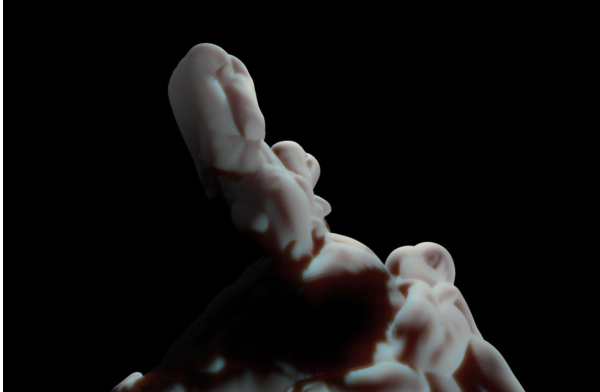
Dew Kim — Succulent Gospel (2026)
Dew Kim uses sculpture, installation, and video to intersect queer bodies, faith, and popular culture, presenting the new work Succulent Gospel, which overlaps human rib structures with the reproductive processes of succulents to rewrite creation narratives from a queer perspective.
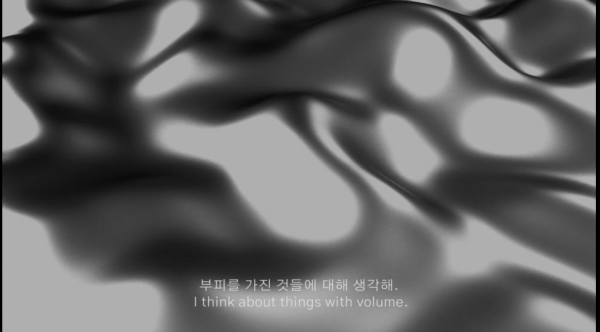
Heemin Chung — Arcadian Dusk (2026), Song of a Child (2019)
Heemin Chung blends digital images with the physical properties of paint, offering Arcadian Dusk alongside her SeMA collection video work Song of a Child to merge scan data, urban debris, and childhood memories onto tactile surfaces.
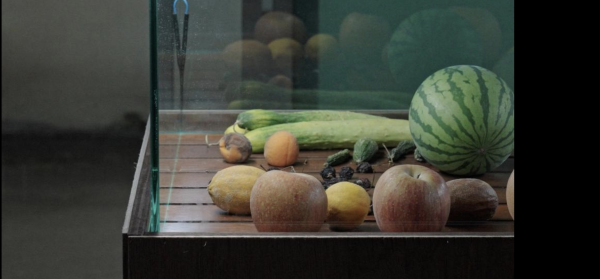
Cha Jeamin --Photosynthesizing Death (2024)
Jaemin Cha addresses life, death, and physical conditions through docu-essay film methodologies; her work Photosynthesizing Death pairs the decaying process of fruit with correspondence regarding Kusozu—Japanese Buddhist paintings depicting nine stages of a decaying corpse—to reveal death and generation as an inseparable, interconnected process.
By bringing together ancient archetypes, contemporary landscapes, and the historical lineage of artists who have passed through the Nanji Residency over the last two decades, Origin of Love: AMOR EX MACHINA reclaims love not as an abstract ideal, but as a concrete condition that sustains life.
Hosted by the Seoul Museum of Art with collaboration from the Institute for Basic Science and sponsorship from Samhwa Paint, the exhibition operates daily docent tours from Tuesday through Sunday at 3 PM, inviting audiences to trace their own paths through these shifting landscapes of memory, technology, and human connection.