For 35 years, master ceramist Lee Young-ho has upheld the traditions of Korean pottery in Icheon, the heart of Korea’s ceramic culture. With a deep affection for the Joseon moon jar, he speaks candidly about its making process, traditional aesthetics, and its growing potential in the global market.
■ The Essence of the Moon Jar: “Even the seam itself is a form of beauty”
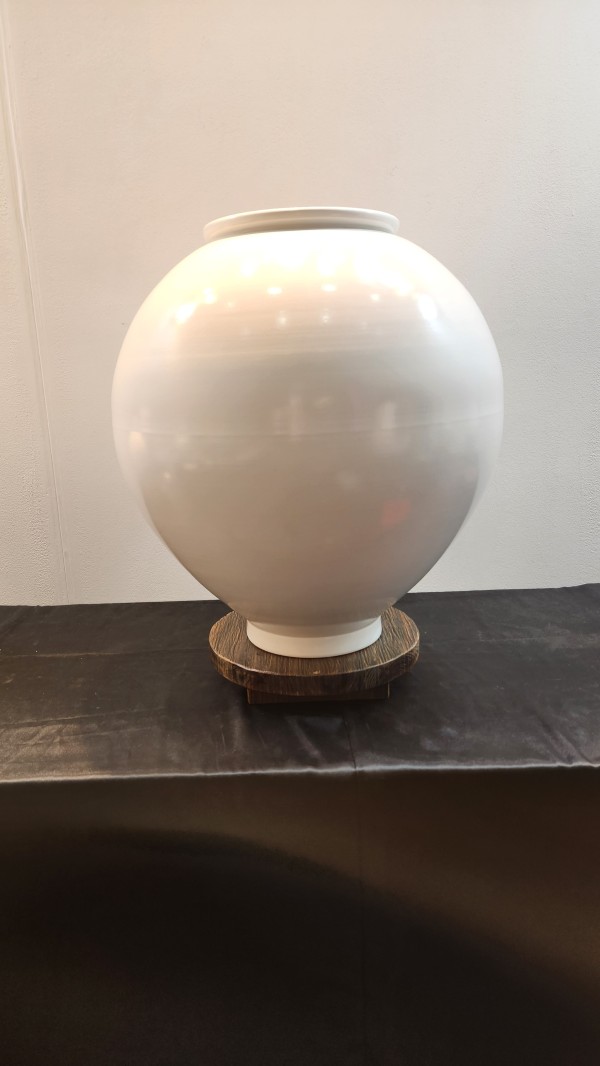
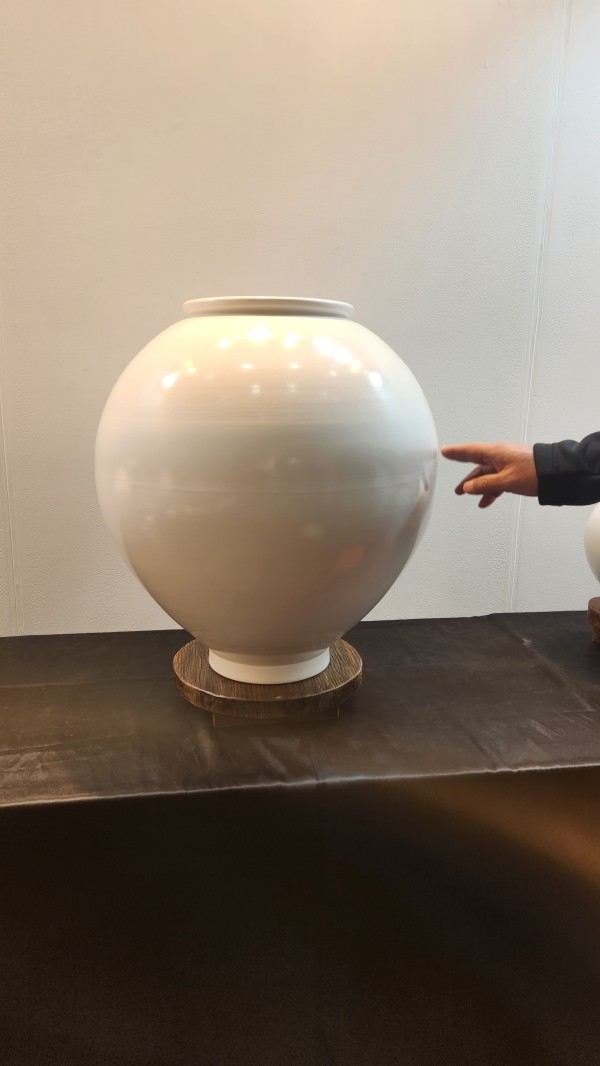
One of the defining characteristics of the traditional moon jar is its joined construction—two separate hemispheres fused together.
In the past, artisans lacked the technique to create such large vessels in a single throw, so they joined two halves instead. Although modern techniques allow for one-piece construction, Lee insists that faithfully recreating the traditional method carries its own meaning.
“Customers often appreciate the traditional seam more than a perfectly smooth jar made in one go.
That visible seam embodies the beauty of tradition.”
However, the joined method is far more difficult. Because the two halves shrink differently in the kiln, the seam is prone to cracking; only one or two jars out of ten survive fully intact. Large moon jars therefore often range from several hundred thousand to over a million won.
■ “The moon jar is an abstract beauty that never grows tiresome”
Lee describes the moon jar’s allure as lying in its subtly shifting, never monotonous curves.
Rather than flawless symmetry, he believes that slight irregularities and gently flowing glaze patterns create a deeper aesthetic resonance.
“The softly spreading traces of glaze, the slightest variations in the curve—this naturalness is what makes a moon jar so beautiful.”
He regards the moon jar almost as an abstract sculptural form, emphasizing that it holds strong visual presence even in modern living spaces.
■ The Global Potential of Korean Ceramics
With the rise of K-culture, interest in Korean ceramics continues to grow overseas. According to Lee, foreign collectors are particularly drawn to the moon jar’s symbolism—its associations with abundance, vital energy, water, and East Asian form.
“Many younger Koreans are rediscovering tea culture, and abroad, interest in Korean sweets, tea rituals, and ceramics has definitely increased. There is real potential.”
During the interview, he noted the frequent inquiries about international shipping. To minimize risk of damage, he relies on double- and triple-layer packaging using newspaper, air cushions, styrofoam, and shock-absorbing materials.
■ Changes in the Icheon Ceramic Village
Icheon, long regarded as a center of Korean ceramics, has been undergoing a transformation. Growing tourism has energized local galleries, shops, and studios, and land prices have risen rapidly.
“It wasn’t much of a tourist destination in the past, but now galleries are popping up and interest is growing.”
He believes these shifts will positively influence the future of the traditional ceramics market.
■ A Master’s Philosophy: “Ceramics is a craft you study for a lifetime”
From celadon to white porcelain to tenmoku, Lee has explored multiple traditions before arriving at the moon jar.
He sees ceramics as a field that must be observed, touched, and practiced throughout one’s life.
“Ceramics is an art created through both human hands and fire. Techniques have improved, but we cannot abandon tradition. Preserving the traces of each era—that is the role of the craftsman.”
Standing between tradition and modernity, the Joseon moon jar remains a symbolic object that represents Korean identity.
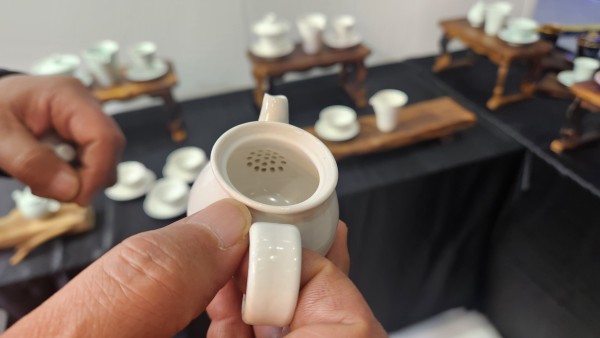
By faithfully reconstructing historical techniques while considering contemporary aesthetics and functionality, Lee Young-ho’s work points toward new possibilities for Korean ceramics on the global stage.