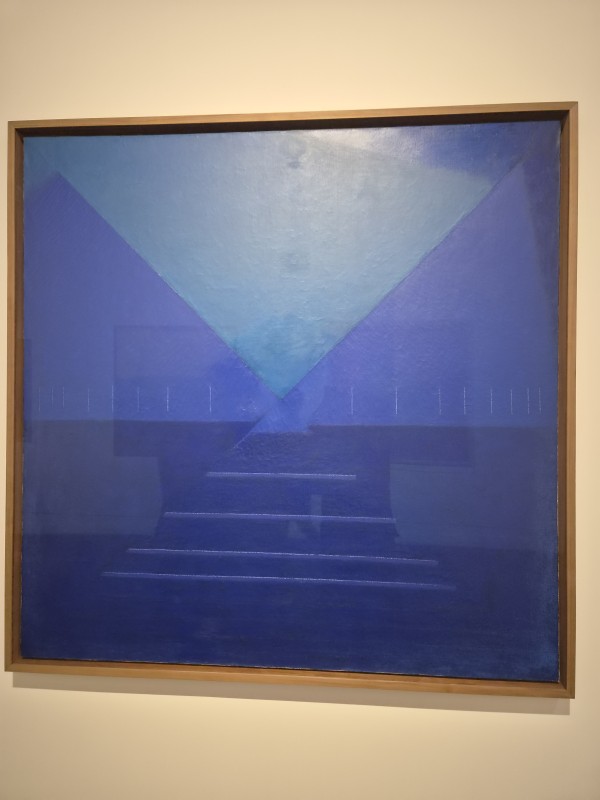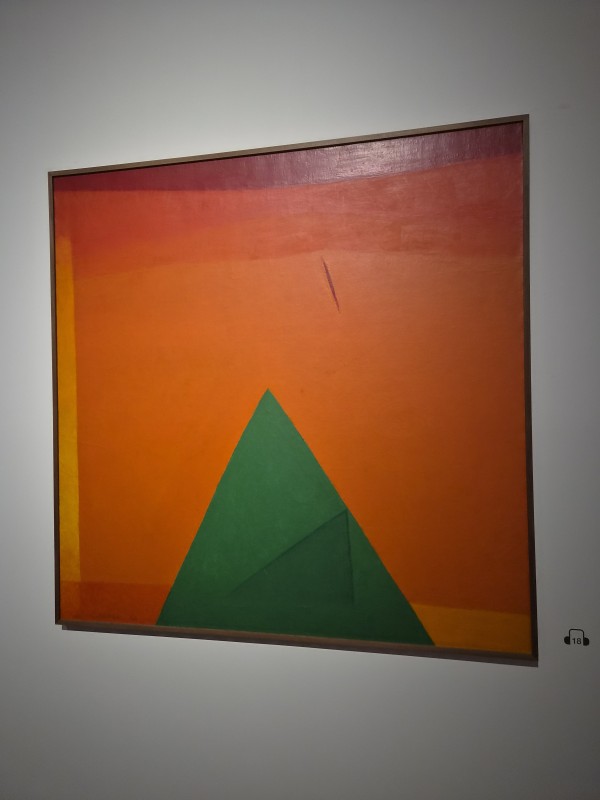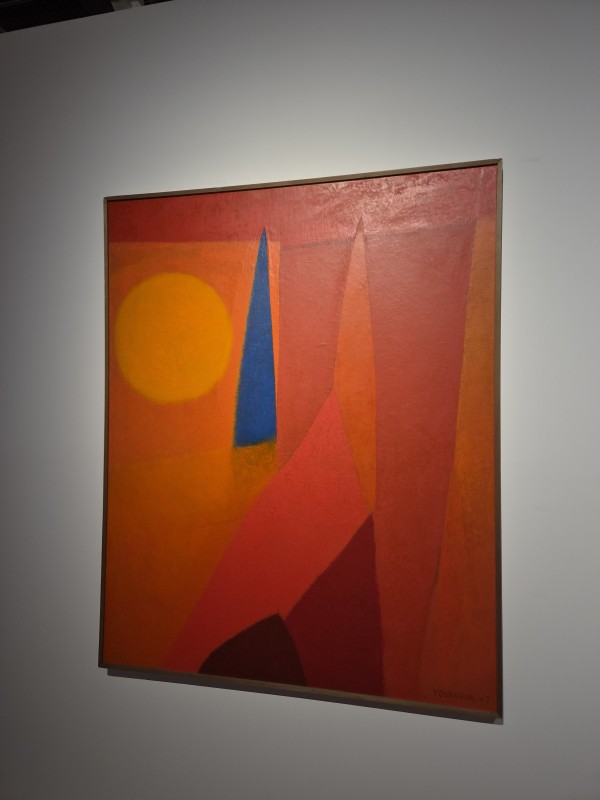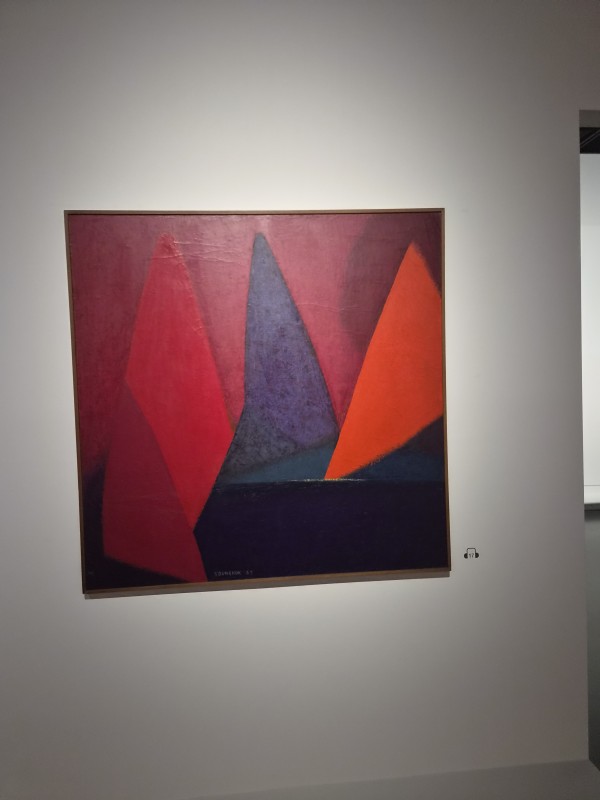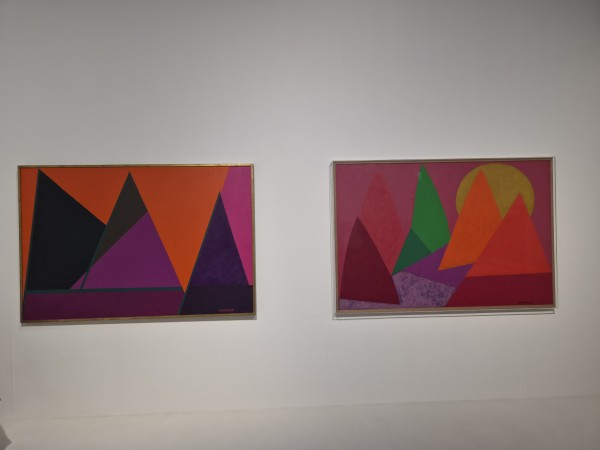
To mark the 110th anniversary of the birth of Yoo Youngkuk (1916–2002), a pioneer of Korean abstract art, the Seoul Museum of Art, in collaboration with the Yoo Youngkuk Art & Cultural Foundation and Chosun Ilbo, presents its largest retrospective to date titled Yoo Youngkuk: Mountains Within Me.
Featuring over 170 works—including previously unseen paintings, reliefs, photographs, drawings, and archival materials—the exhibition offers a comprehensive view of his artistic legacy.
As the inaugural project of the museum's new "Masters of Modern Korean Art" series, the exhibition connects historical achievements with contemporary perspectives.
Throughout a turbulent history marked by Japanese colonial rule, the Korean War, democratization, and rapid economic growth, Yoo persistently practiced abstract art as both his daily life and artistic conviction.
Spanning over six decades of creation—from his early experiments at Tokyo’s Bunka Gakuin in 1935 to the lyrical, introspective abstraction of his later years—the exhibition departs from a standard chronological format. Instead, it proposes a temporal journey that orbits around 1964, a pivotal turning point in his life, moving both backward and forward through time.
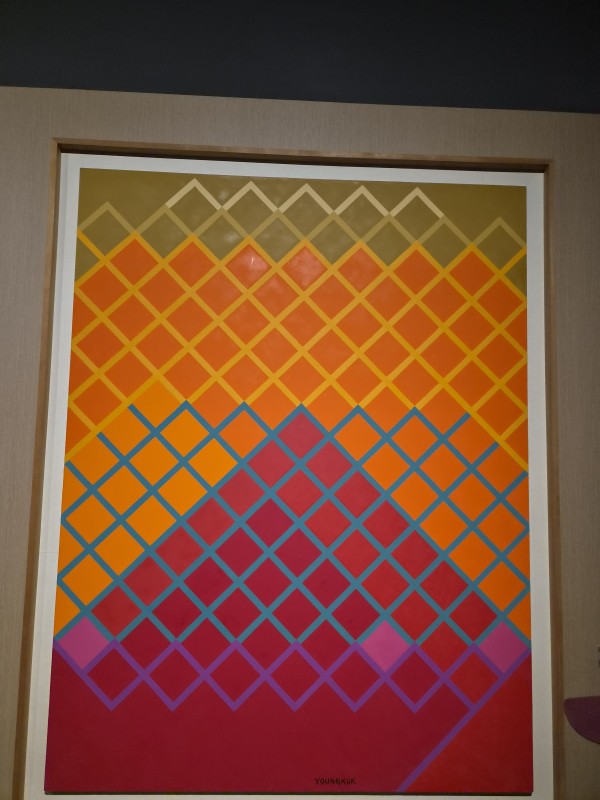
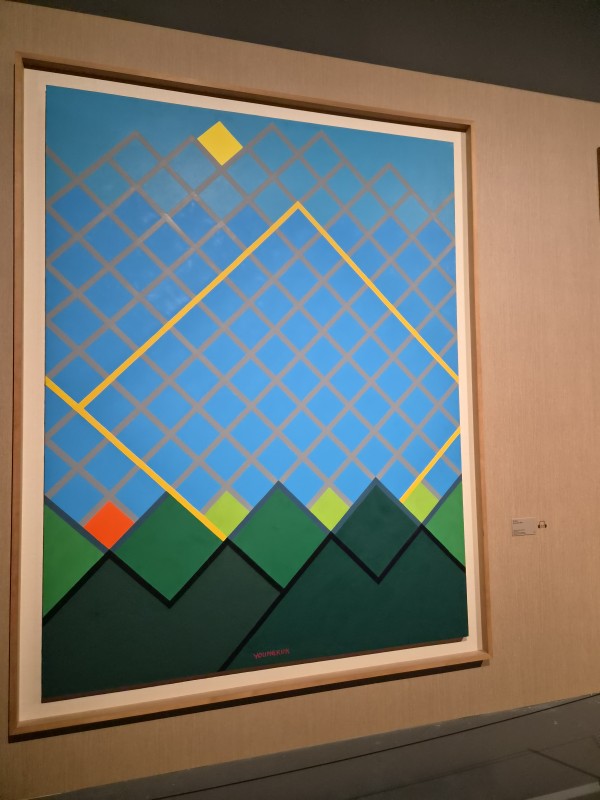
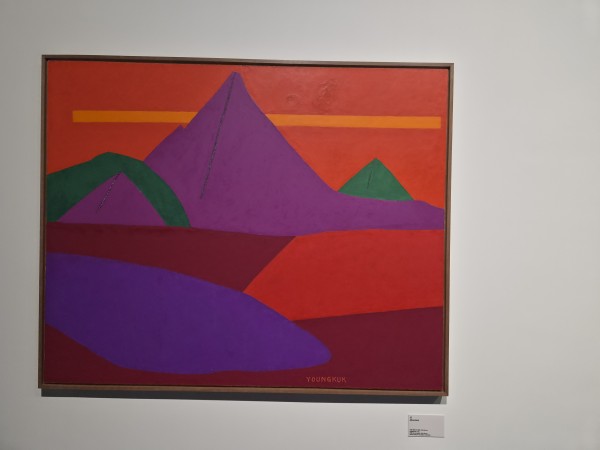
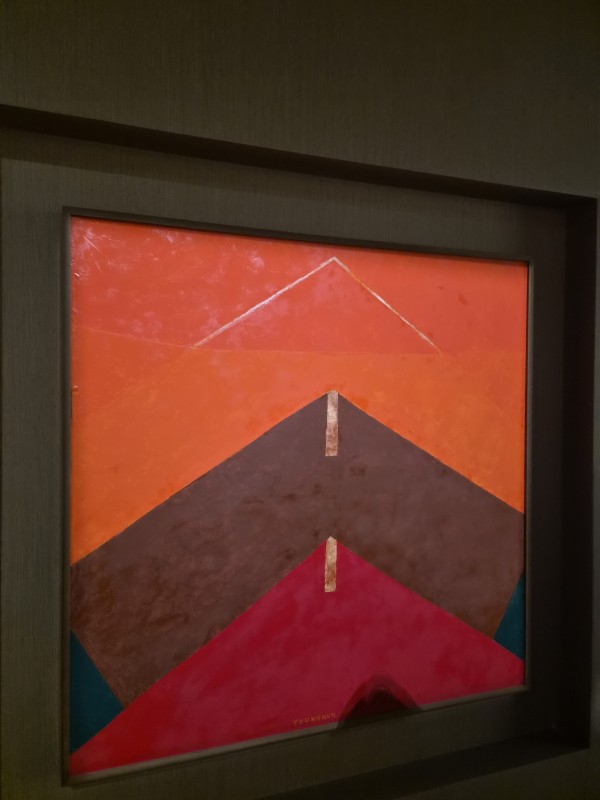
This structure reveals the multi-dimensional nature of Yoo's artistic universe, where he abstracted the mountain using the fundamental elements of painting: points, lines, planes, and color.
The mountain, which reappears throughout his oeuvre, is simultaneously a reflection of his hometown of Uljin, a repository of memory, and an internal structural balance composed of lines and colors.
Beyond a mere external subject of representation, the mountain served as the plastic essence residing within his mind.
In 1964, at the age of forty-eight, Yoo held his first solo exhibition. Despite serving as a foundational figure for key avant-garde collectives such as New Realism (1947), Modern Art Association (1957), Contemporary Artists Exhibition (1958), and Shinsanghoe (1962), a solo show had come unusually late in his career.
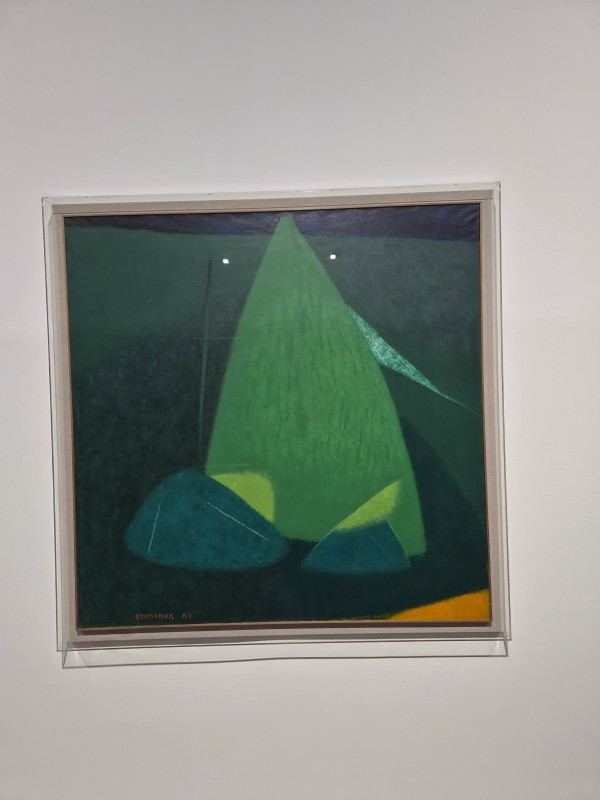
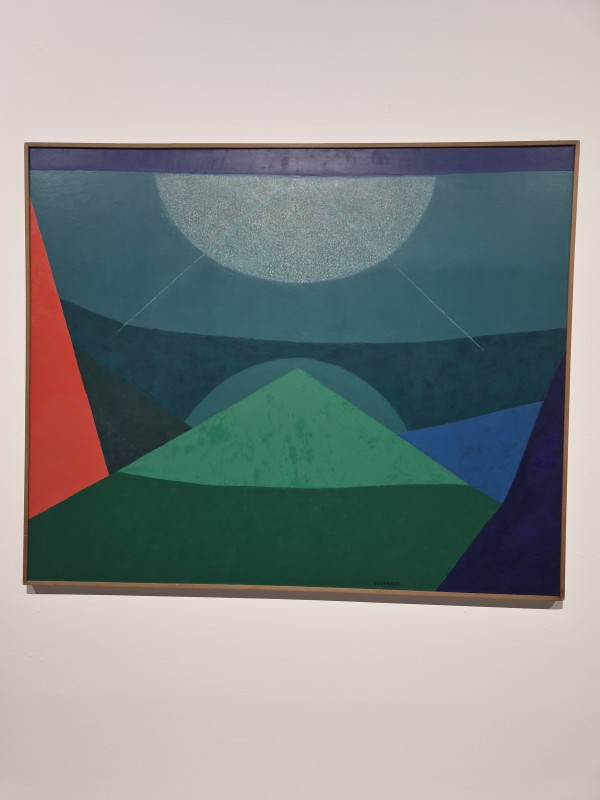
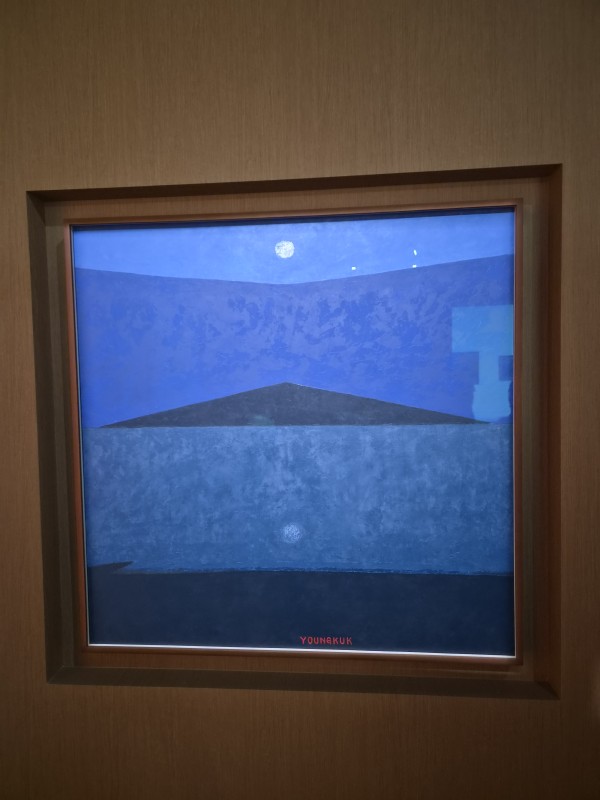
Art critic Kim Young-ju famously described him as a "refiner of inquisitive color," noting the overwhelming response to his large-scale canvases filled with dynamic primary hues.
Marking a clear turning point, Yoo declared at this exhibition that he would withdraw from group activities to present his work exclusively through solo exhibitions every two years.
While contemporaries like Han Mook, Moon Shin, and Kim Whanki departed for Paris and New York, Yoo remained in Korea.
Retreating into his studio, he detached himself from the rapid pace of society, adhering to a disciplined daily routine from 9 AM to 6 PM dedicated entirely to abstract painting.
Traces of his artistic origins extend back to 1935, when he studied oil painting at Bunka Gakuin in Tokyo.
Absorbing European avant-garde movements including Cubism, Futurism, Surrealism, and Constructivism, Yoo experimented freely across painting, relief, and photography.
Upon returning to Korea in 1943, he endured a period he later referred to as his lost decade from 1943 to 1955, during which he supported his family by working on fishing boats and running a distillery amid the turmoil of liberation and war.
Despite these hardships, he later served as a professor at Seoul National University and consistently challenged academicism, continuously renewing his work through Constructivist abstraction, semi-abstract regional motifs, and Expressionist color harmony.
The late 1960s and 1970s marked the peak of Yoo’s abstract practice.
Resigning from his professorship at Hongik University to eliminate administrative burdens, he devoted himself fully to studio work.
The geometric order of his compositions—achieved through the balance, opposition, and dynamic energy of lines, planes, and vivid colors—resonated with global developments in science, space exploration, and Western trends like Op Art and Hard-edge painting.
His canvases featured bold primary colors alongside refined variations of purple, pink, and green, layered with rich textures. Remarkably, it was not until 1975, at age fifty-nine, that Yoo sold his very first painting.
In the final phase of his life, Yoo achieved a mature state of introspective abstraction where nature and the self existed in total harmony.
After undergoing pacemaker surgery in 1977, he endured eight major surgeries and thirty-seven hospitalizations until his passing.
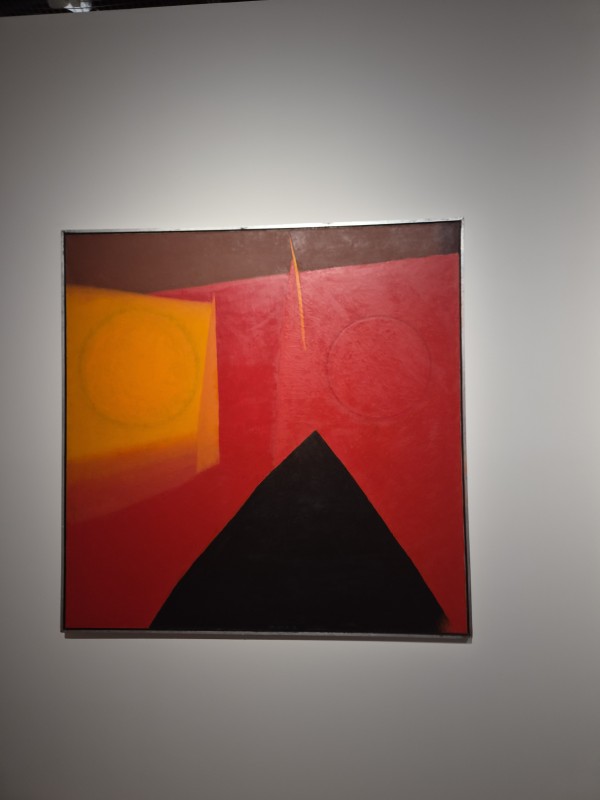
Nevertheless, he never ceased painting, continuing his strict daily studio routine without assistants.
Works from this period, including his final painting Work (1999) alongside monumental canvases such as Mountain-Red (1994) and Mountain-Blue (1994), evoke a sense of quietude and profound vitality.
Situated at the lobby entrance, an archive section featuring timelines, photographs, news articles, and exhibition catalogues serves as both an introduction and a concluding gateway, inviting contemporary audiences to encounter the enduring force of Yoo Youngkuk's visual world.